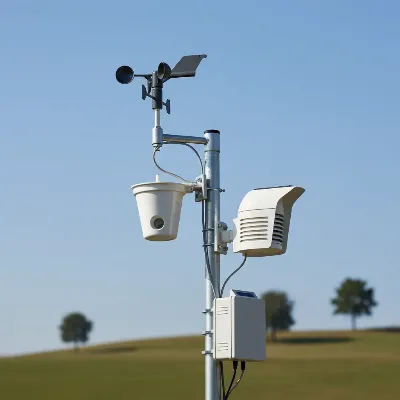
Are you a weather enthusiast or someone simply seeking to understand the climate of your own backyard with unparalleled precision? Investing in a home weather station can transform how you interact with your environment, offering hyper-local insights far beyond general forecasts. Among the myriad options, the Ambient Weather WS-5000 Ultrasonic Smart Weather Station stands out as a high-end contender, promising advanced features, impressive accuracy, and robust smart home integration.
The Ambient Weather WS-5000 redefines personal weather monitoring, moving beyond its predecessors to deliver a sophisticated experience. This station is designed for those who demand detailed, real-time data, and its performance has been rigorously tested to ensure it meets the expectations of both casual users and serious meteorology buffs. With an emphasis on accuracy, durability, and connectivity, the WS-5000 aims to provide a comprehensive window into your local weather patterns.
What is a Weather Station and Why You Need One?
A weather station is a device or collection of instruments used to measure and record atmospheric conditions to provide information for weather forecasting and studying climate. These stations typically include sensors for temperature, humidity, wind speed, wind direction, and rainfall. Having a personal weather station in your backyard allows you to gather precise, localized data that can be significantly more accurate than regional forecasts, which often rely on data from airports or distant meteorological centers.
Owning a weather station is important for several reasons. For gardeners, it provides crucial information for planting and watering schedules. For homeowners, it aids in planning outdoor activities, understanding energy consumption related to climate, and preparing for severe weather. Beyond personal convenience, monitoring local weather contributes to a broader understanding of microclimates and long-term climate trends, making you an active participant in environmental observation.
Types of Weather Stations Available
The market offers a diverse range of weather stations, each with unique advantages and disadvantages. Understanding these types can help you pinpoint the best fit for your needs and budget.
- Wired Weather Stations: These stations have sensors connected directly to a display console via cables.
- Pros: Often more reliable in terms of data transmission, as they are not subject to wireless interference or battery issues for the sensors.
- Cons: Installation can be more complex due to cable routing, limiting placement options.
- Wireless Weather Stations: The most common type, these use radio frequency (RF) to transmit data from outdoor sensors to an indoor console.
- Pros: Easier installation with greater flexibility in sensor placement, as no wires are needed between the outdoor array and the console.
- Cons: Can be susceptible to interference, and sensor batteries need periodic replacement.
- Wi-Fi/Internet-Connected Weather Stations: These advanced wireless stations connect to your home Wi-Fi network, allowing data to be uploaded to cloud services, accessed via smartphone apps, and integrated with smart home systems.
- Pros: Remote access to data from anywhere, historical data logging, community data sharing (e.g., Weather Underground), and smart home automation capabilities.
- Cons: Requires a stable Wi-Fi connection and can sometimes be more complex to set up initially.
- All-in-One Sensor Suites vs. Modular Systems: Some stations combine multiple sensors (wind, rain, temperature, humidity, UV, solar radiation) into a single unit, simplifying installation. Others offer modular systems where individual sensors can be placed optimally and expanded.
- Ambient Weather WS-5000 notably features a more advanced modular design compared to older Ambient Weather all-in-one models, with separate wind, rain, and thermo-hygrometer sensors. This design choice contributes to improved accuracy and durability.
Factors to Consider When Buying a Weather Station (Buying Guide)
Choosing the right weather station involves evaluating several key factors to ensure it meets your specific requirements.
Accuracy and Reliability of Sensors
The core function of a weather station relies on the precision and consistency of its sensors. Look for stations that offer high accuracy for essential measurements like temperature, humidity, barometric pressure, wind speed, wind direction, and rainfall.
- Temperature and Humidity: Accurate temperature and humidity sensors are crucial for comfort monitoring and calculating dew point and heat index. The WS-5000’s redesigned sensor suite includes shielded temperature and humidity sensors for improved accuracy.
- Wind Measurement: Traditional anemometers with cups and vanes can suffer from wear and require maintenance. The Ambient Weather WS-5000 utilizes an ultrasonic anemometer with no moving parts, providing highly accurate and responsive wind speed and direction readings, even for slight breezes. This technological advancement reduces maintenance and extends the sensor’s lifespan.
- Rainfall: Tipping bucket rain gauges are standard, but their accuracy can vary. The WS-5000 features a separate rain gauge with a larger funnel, specifically designed to improve rainfall measurements compared to previous models.
- Barometric Pressure: A reliable barometer helps predict short-term weather changes. The WS-5000 has shown more accurate responses to pressure changes.
- Other Sensors: High-end stations like the WS-5000 also include UV and solar radiation sensors, adding depth to your weather data. Many also offer expandability for optional sensors like air quality, soil moisture, water temperature, and lightning detectors.
|
Our Picks for the Best Weather Station in 2026
As an Amazon Associate I earn from qualifying purchases.
|
||
| Num | Product | Action |
|---|---|---|
| 1 | Sainlogic WiFi Smart Weather Station SA9 with 24H/ 7Days Accurate Weather Forecast by Weatherseed® AI, 8.5" Large Display,UV,Sun Light,Rain Gauge,Wind Gauge,2-Year Data Storage & Export(Only 2.4G) |

|
| 2 | 14-in-1 Wireless Weather Station with Outdoor Wireless Sensor,Radio-Controlled Clock,Rain Gauge,Wind Speed/Direction,Moon Phase,Wind Chill Index,Outdoor Dew Point,Barometer(NO WiFi) |
|
| 3 | AcuRite Iris (5-in-1) Indoor/Outdoor Wireless Weather Station for Indoor and Outdoor Temperature and Humidity, Wind Speed and Direction, and Rainfall with Digital Display (01512M) |
|
| 4 | 10-in-1 Wireless Weather Station,with Outdoor Sensor,Rain Gauge,Atomic Clock,Wind Speed/Wind Direction,Indoor Temperature and Humidity,Barometer,Weather Forecast, etc.(NO WiFi) |
|
| 5 | WiFi Weather Station Wireless Indoor Outdoor, Thermometer with Rain Gauge and Wind Speed/Direction, Large Display for Weather Forecast, Temperature, Humidity, Clock, Alarm, UV, Air Pressure, Black |
|
| 6 | Sainlogic Smart WiFi Weather Stations Wireless Indoor Outdoor SA68 Plus,24/7 AI Weather Forecast by Weatherseed®,APP/Email Alert,Home Weather Station with Rain Gauge,2-Year Data Storage(Only 2.4G) |
|
| 7 | Tempest Weather Station with Built-in Wind Meter, Rain Gauge, and Accurate Weather Forecasts, Wireless, App and Alexa Enabled |
|
| 8 | Ambient Weather WS-2902 WiFi Smart Weather Station |
|
| 9 | Ambient Weather WS-2000 Smart Weather Station with WiFi Remote Monitoring and Alerts |
|
| 10 | Sainlogic Smart WiFi Weather Station with 24H/7Days Accurate Weather Forecast by Weatherseed® AI, 8.5" Large Display,UV,Sun Light,Rain Gauge,Wind Gauge,2-Year Data Storage & Export, Only 2.4G |
|
Measurement Range and Connectivity
Consider the operational ranges of the sensors to ensure they are suitable for your local climate extremes. For example, outdoor temperature ranges can vary significantly by model. The Ambient Weather WS-5000 offers an outdoor temperature range of -40 to 149°F (-40 to 65°C), a humidity range of 10 to 99%, and a wind speed range of 0 to 89 mph.
Connectivity is paramount in modern weather stations.
- Wireless Range: The WS-5000’s outdoor sensor array connects to the console via RF (915 MHz) with a line-of-sight range of up to 1000 feet, typically around 300 feet under most conditions.
- Wi-Fi and Smart Home Integration: Wi-Fi connectivity allows you to upload data to online platforms like AmbientWeather.net and Weather Underground. The WS-5000 boasts best-in-class smart home integration with support for IFTTT, Amazon Alexa, and Google Assistant, enabling automation based on your local weather data. This feature allows you to, for example, program sprinklers to turn off if rain is detected or adjust indoor lighting based on solar brightness.
Additional Features
Beyond basic measurements, many weather stations offer supplementary features that enhance usability and data analysis.
- Display Console: The WS-5000 includes a full-color TFT LCD console that is a significant upgrade from older models. It displays a wealth of information, including calculated data like “Feels Like” temperature (wind chill and heat index), dew point, sunrise/sunset times, moon phase, and a forecast. The console offers fast refresh times, as little as five seconds for some data, and supports light or dark backgrounds with automatic brightness control. However, some users might find the sheer amount of data on the screen to be a bit crowded.
- Data Logging and Export: Many stations allow for historical data storage, often viewable directly on the console or through web/mobile applications. The WS-5000 can export data to an SD card (optional) for advanced analysis and firmware updates.
- Alerts and Notifications: Customizable alerts for specific weather conditions (e.g., high winds, low temperatures, heavy rain) can be invaluable for safety and planning.
Durability and Weather Resistance
Outdoor sensors are exposed to the elements, so their construction and ability to withstand harsh weather are critical.
- Materials and Design: Look for robust materials and designs that can endure UV radiation, extreme temperatures, heavy rain, and strong winds. The WS-5000’s ultrasonic anemometer, with no moving parts, inherently offers greater durability and requires less maintenance than traditional cup-and-vane designs. The sensor array includes a pagoda thermo-hygrometer radiation shield with passive aspiration for accurate temperature readings.
- Maintenance: While the WS-5000 reduces maintenance needs due to its ultrasonic wind sensor, regular checks of the rain gauge for debris and occasional cleaning of other sensors will extend its lifespan. For colder climates, an optional heater accessory for the wind sensor can prevent ice and snow accumulation, though it requires an AC outlet.
Top Picks – Detailed Review of the Ambient Weather WS-5000 and Other Noteworthy Stations
The Ambient Weather WS-5000 stands out as a premium choice, but it’s helpful to understand its position relative to other top contenders in the market.
Ambient Weather WS-5000 Ultrasonic Smart Weather Station
The WS-5000 is Ambient Weather’s most sophisticated home and light industrial weather station. It represents a significant departure from the company’s previous designs, offering a more upscale feel and modular sensor components.
- Pros:
- Superior Accuracy: Features an ultrasonic anemometer for highly accurate and responsive wind measurements, and a separate, larger-funnel rain gauge for improved rainfall data. Barometric pressure readings are also notably more accurate.
- Advanced Sensor Suite: Includes UV and solar radiation sensors, and is highly expandable with optional sensors for air quality, soil moisture, water temperature, and lightning detection.
- Best-in-Class Smart Home Connectivity: Seamless integration with IFTTT, Amazon Alexa, and Google Assistant allows for extensive smart home automation.
- Fast Data Updates: Console refresh rates are as quick as five seconds, a vast improvement over older models.
- Vibrant Display: The full-color TFT LCD console offers a rich, easy-to-read display with charting capabilities for historical data.
- Cons:
- Price: It is a pricier option compared to entry-level and mid-range stations.
- Console Display Can Be Cluttered: While rich in data, the console can appear crowded to some users, especially with many additional sensors connected.
- Setup Quirks: Initial setup, particularly connecting some sensors or navigating console menus, can be cumbersome for some users.
> “The WS-5000 offers an impressive combination of accuracy and best-in-class smart home connectivity, a feature for which Davis weather stations are woefully behind.” – Weather Station Experts
WeatherFlow Tempest Weather System
The Tempest is a popular, modern weather station known for its sleek design and lack of moving parts.
- Pros: Extremely easy and quick to set up (under 5 minutes). All sensors are integrated into a single housing. Features excellent lightning detection and smart home integration via IFTTT.
- Cons: No physical console, relying entirely on a smartphone app for data display. The haptic rain sensor, while improved, may not offer the same accuracy as a tipping bucket gauge in some opinions. Cannot be expanded with additional sensors.
Ambient Weather WS-2000 Smart Weather Station
Often considered the “Best Overall” by some reviewers, the WS-2000 uses the same advanced console as the WS-5000 but pairs it with a different sensor suite (similar to the WS-2902).
- Pros: Good balance of features and price. Comprehensive measurements including wind, temperature, humidity, rainfall, UV, and solar radiation in an all-in-one sensor array. Excellent color tablet display.
- Cons: Sensor updates are slower (16 seconds outdoors, 64 seconds indoors) compared to the WS-5000. May suffer from some of the rainfall over-measurement and barometer quirks found in older WS-2902 sensors.
AcuRite Atlas Professional Home Weather Station
A popular choice, especially for those prioritizing rain measurement.
- Pros: Monitors eight different conditions including UV and light intensity. Direct-to-Wi-Fi HD display with auto-dimming. Excellent rain gauge. Programmable alarms. Lightning detection up to 25 miles.
- Cons: Some users report difficulty connecting the unit to Wi-Fi.
Comparison Table: Top Weather Stations
| Feature | Ambient Weather WS-5000 | WeatherFlow Tempest | Ambient Weather WS-2000 | AcuRite Atlas Professional |
|---|---|---|---|---|
| Wind Sensor | Ultrasonic (no moving parts) | Haptic/Acoustic (no moving parts) | Cup/Vane (moving parts) | Cup/Vane (moving parts) |
| Rain Gauge | Tipping Bucket (separate unit, large funnel) | Haptic | Tipping Bucket (integrated) | Tipping Bucket (integrated) |
| Data Update Rate | ~5 seconds (console) | Real-time (app) | 16 seconds (outdoor), 64 seconds (indoor) | Real-time |
| Display Console | Full-color TFT LCD | App-only | Full-color TFT LCD | Direct-to-Wi-Fi HD Display |
| Smart Home Support | IFTTT, Alexa, Google Assistant | IFTTT | IFTTT, Alexa, Google Assistant | Smartphone app, alerts |
| Expandability | Extensive (air quality, soil, lightning, etc.) | None | Limited (temperature/humidity, air quality) | Optional lightning detection |
| Outdoor Temp Range | -40 to 149°F (-40 to 65°C) | -35 to 140°F (-37 to 60°C) | -40 to 149°F (-40 to 65°C) | -40 to 158°F (-40 to 70°C) |
| Wind Speed Range | 0 to 89 mph | 0 to 100 mph | 0 to 100 mph | 0 to 160 mph |
| Approx. Price | High (often $400-$500) | Mid-High (around $350) | Mid-Range (around $300) | Mid-Range (around $200-$300) |
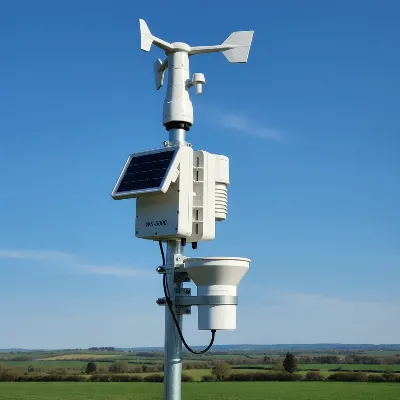 Ambient Weather WS-5000 outdoor sensor array with ultrasonic anemometer and separate rain gauge for precise weather monitoring.
How to Use and Maintain Your Weather Station
Proper installation, setup, and routine maintenance are crucial for maximizing the accuracy and longevity of your Ambient Weather WS-5000 or any other weather station.
Installation and Setup
- Placement: Select an optimal location for your outdoor sensor array. For accurate wind readings, place the ultrasonic anemometer as high as possible, ideally at least 7 feet above surrounding structures and away from obstructions. Position the temperature/humidity sensor about 4-5 feet from the ground, away from heat sources (chimneys, AC units) and direct sunlight, and at least 50 feet from bodies of water or dense foliage to ensure accurate readings. The rain gauge should also be in an open area to avoid obstruction.
- Mounting: The WS-5000 sensor array mounts to any pole between 1.25 and 2 inches in diameter using an adaptive mounting bracket and U-bolt design. Ensure it’s plumb (level) using the built-in bubble level for the utmost accuracy.
- Power Up: Insert necessary batteries into the sensors (AA batteries are typically required, check manual).
- Console and Sensor Connection: Power on your display console. In most cases, sensors will automatically connect. If not, refer to Ambient Weather’s support documentation for troubleshooting, which might involve a specific re-sync procedure.
- Wi-Fi and Internet Connection: Connect your WS-5000 console to your home Wi-Fi network. This usually involves entering your console’s MAC address and Wi-Fi credentials through the console interface or a dedicated app. This step enables remote access to your data via AmbientWeather.net and other online platforms like Weather Underground.
- Smart Home Integration: Once connected to AmbientWeather.net, you can link your station to IFTTT, Amazon Alexa, or Google Assistant via the portal to enable smart home functionalities.
Using Features and Applications
The WS-5000’s full-color TFT LCD console displays a comprehensive array of real-time and historical data. Use the buttons on the console to navigate through different screens, view graphs, and access past weather data. For remote monitoring, download the Ambient Weather Network app on your mobile device or access AmbientWeather.net through a web browser. These platforms offer a customized dashboard where you can visualize your data, set alerts, and share information with the weather community.
Maintenance Tips for Longevity
- Regular Cleaning: Periodically clean the rain gauge funnel and tipping bucket to prevent debris (leaves, dirt, insects) from obstructing measurements.
- Sensor Check: Inspect all outdoor sensors for physical damage, spiderwebs, or other blockages that could affect readings. The ultrasonic anemometer generally requires less cleaning as it has no moving parts.
- Battery Replacement: While the outdoor sensor array is solar-powered, some components or indoor sensors may require battery backups. Check battery levels periodically and replace them as needed.
- Firmware Updates: Ensure your station’s firmware is up to date. The WS-5000 can use an SD card for firmware upgrades. Updates often include bug fixes, performance improvements, and new features.
- Winterization (for cold climates): If you live in an area with heavy snow and ice, consider the optional heater accessory for the ultrasonic anemometer to maintain its functionality.
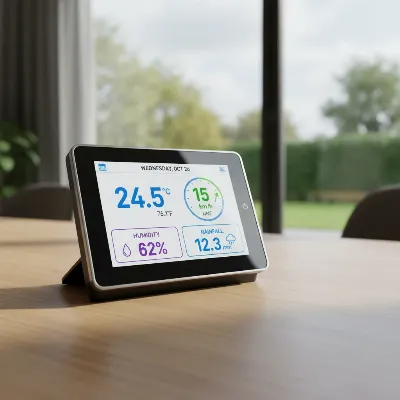 A clear, modern display console of a weather station showing real-time data for temperature, wind, humidity, and rainfall in a living room setting.
Conclusion
The Ambient Weather WS-5000 Ultrasonic Smart Weather Station stands as a testament to advancements in personal weather monitoring. Its blend of high-end accuracy, facilitated by innovations like the ultrasonic anemometer and modular sensor design, coupled with robust smart home connectivity, makes it a compelling choice for anyone serious about hyper-local weather data. While it represents a significant investment, its performance and feature set justify the cost, offering a detailed and dynamic window into your backyard’s climate.
From precise wind measurements and improved rainfall accuracy to seamless integration with popular smart home platforms, the WS-5000 delivers a comprehensive and reliable user experience. It empowers you to not only observe but also react to your local weather in intelligent ways, enhancing your daily planning and deepening your understanding of the environment.
What aspects of hyper-local weather data are most critical for your daily life, and how could a station like the Ambient Weather WS-5000 elevate your approach to weather monitoring?
Frequently Asked Questions
What makes the Ambient Weather WS-5000’s wind sensor different?
The Ambient Weather WS-5000 uses an ultrasonic anemometer, which has no moving parts. Instead of traditional cups and vanes, it employs sound waves to measure wind speed and direction. This design offers superior accuracy, faster response times, and significantly reduces maintenance requirements compared to mechanical wind sensors, as there are no parts to wear out or get stuck.
Can the Ambient Weather WS-5000 connect to smart home devices?
Yes, the Ambient Weather WS-5000 boasts excellent smart home connectivity. It integrates with platforms like IFTTT, Amazon Alexa, and Google Assistant. This allows users to set up custom automations, such as turning off sprinklers when rain is detected or asking voice assistants for a full weather report directly from their station’s data.
Is the Ambient Weather WS-5000 suitable for extreme weather conditions?
The WS-5000 is designed with durability in mind, featuring weather-resistant components and an outdoor temperature range of -40 to 149°F (-40 to 65°C). For very cold climates with heavy snow or ice, an optional heater accessory for the ultrasonic anemometer is available to prevent accumulation, ensuring continuous accurate readings.
How often does the WS-5000 update its weather data on the console?
One of the significant advantages of the Ambient Weather WS-5000 is its fast data refresh rate. The display console can show new data as frequently as every five seconds for some parameters. This provides users with near real-time updates of their local weather conditions, making it highly responsive compared to many other home Weather Stations.
What kind of historical data can I access from the WS-5000?
The Ambient Weather WS-5000’s full-color LCD console allows you to view archived data, including graphs and charts of past weather conditions. Additionally, by connecting the station to the Ambient Weather Network online, you can access more extensive historical data, often for several years, depending on your subscription level. The system also supports data export to an SD card for detailed analysis.