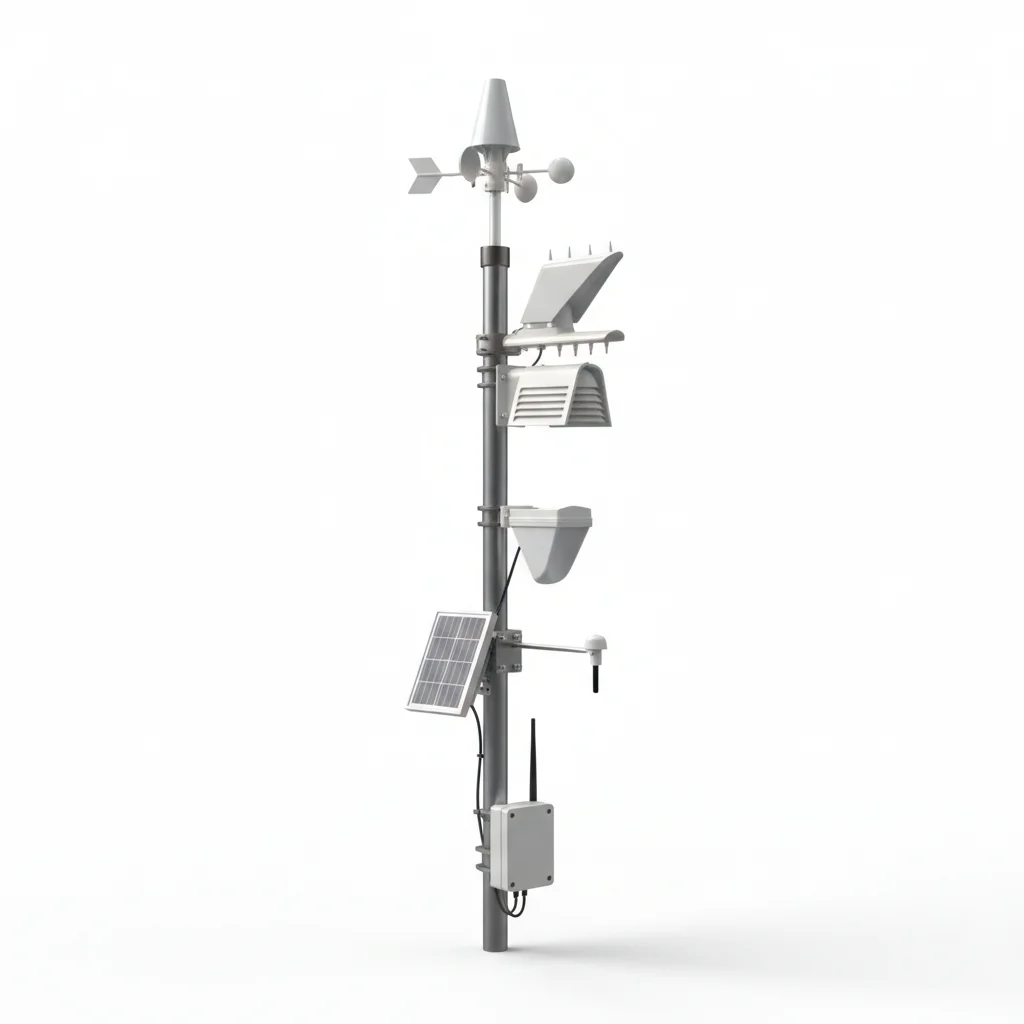
Choosing the right weather station for vineyards is crucial for optimal grape growth and yield. Vineyards require precise data on temperature, humidity, rainfall, and wind to make informed decisions regarding irrigation, pest control, and harvest timing. A dedicated weather station provides real-time, localized information that generic forecasts cannot match, directly impacting the quality and quantity of your grape production. We will explore five key features essential for any vineyard weather station.
Accurate Temperature and Humidity Monitoring
For vineyards, accurate temperature and humidity readings are paramount. Grapes are highly sensitive to temperature fluctuations, which can affect sugar content, acidity, and overall flavor profile. High humidity can lead to fungal diseases like powdery mildew and downy mildew, which can devastate a crop if not managed proactively. A reliable weather station should offer sensors capable of precise measurements, often with a margin of error of less than ±0.5°C for temperature and ±3% for humidity. Look for stations with external sensors that can be strategically placed within the vineyard canopy to capture microclimates accurately. For explore our home weather reviews on this site.
Many advanced systems also provide dew point calculations, which are critical for predicting the onset of fungal conditions. Data logging capabilities are also vital, allowing growers to track trends over time and correlate weather patterns with grape development stages. This historical data is invaluable for long-term planning and risk assessment.
Rainfall Measurement with Self-Emptying Gauge
Rainfall is a critical factor in vineyard management, influencing soil moisture, irrigation needs, and disease pressure. A weather station for vineyards must include a highly accurate rain gauge, preferably a self-emptying tipping bucket design. This type of gauge ensures continuous, reliable measurements without manual intervention, even during heavy downpours. The resolution of the rain gauge, typically 0.2 mm or 0.01 inches, is important for precise water management.
Understanding rainfall patterns helps growers optimize irrigation schedules, preventing both water stress and overwatering. Excessive rainfall can also lead to soil erosion and nutrient leaching, making accurate measurement essential for soil health. Some systems offer heated rain gauges for regions prone to freezing rain or snow, ensuring year-round data collection.
Wind Speed and Direction Sensors
|
Our Picks for the Best Weather Station in 2026
As an Amazon Associate I earn from qualifying purchases.
|
||
| Num | Product | Action |
|---|---|---|
| 1 | AcuRite Iris (5-in-1) Indoor/Outdoor Wireless Weather Station for Indoor and Outdoor Temperature and Humidity, Wind Speed and Direction, and Rainfall with Digital Display (01512M) |

|
| 2 | WiFi Weather Station Wireless Indoor Outdoor, Thermometer with Rain Gauge and Wind Speed/Direction, Large Display for Weather Forecast, Temperature, Humidity, Clock, Alarm, UV, Air Pressure, Black |
|
| 3 | Sainlogic Smart WiFi Weather Station with 24H/7Days Accurate Weather Forecast by Weatherseed® AI, 8.5" Large Display,UV,Sun Light,Rain Gauge,Wind Gauge,2-Year Data Storage & Export, Only 2.4G |
|
| 4 | Ambient Weather WS-2000 Smart Weather Station with WiFi Remote Monitoring and Alerts |
|
| 5 | Sainlogic Smart WiFi Weather Stations Wireless Indoor Outdoor SA68 Plus,24/7 AI Weather Forecast by Weatherseed®,APP/Email Alert,Home Weather Station with Rain Gauge,2-Year Data Storage(Only 2.4G) |
|
| 6 | Ambient Weather WS-2902 WiFi Smart Weather Station |
|
| 7 | 10-in-1 Wireless Weather Station,with Outdoor Sensor,Rain Gauge,Atomic Clock,Wind Speed/Wind Direction,Indoor Temperature and Humidity,Barometer,Weather Forecast, etc.(NO WiFi) |
|
| 8 | 14-in-1 Wireless Weather Station with Outdoor Wireless Sensor,Radio-Controlled Clock,Rain Gauge,Wind Speed/Direction,Moon Phase,Wind Chill Index,Outdoor Dew Point,Barometer(NO WiFi) |
|
| 9 | Tempest Weather Station with Built-in Wind Meter, Rain Gauge, and Accurate Weather Forecasts, Wireless, App and Alexa Enabled |
|
| 10 | Sainlogic WiFi Smart Weather Station SA9 with 24H/ 7Days Accurate Weather Forecast by Weatherseed® AI, 8.5" Large Display,UV,Sun Light,Rain Gauge,Wind Gauge,2-Year Data Storage & Export(Only 2.4G) |
|
Wind conditions significantly impact vineyards, affecting everything from pollination and spray drift to the risk of physical damage to vines. A robust anemometer and wind vane are indispensable features. The anemometer should accurately measure wind speed, including gusts, while the wind vane provides precise direction. These sensors are typically mounted at a specific height to avoid obstructions and provide representative data for the vineyard.
- Monitoring wind speed helps determine optimal times for applying pesticides and herbicides, minimizing drift to non-target areas.
- Understanding prevailing wind directions can inform vineyard layout and the placement of windbreaks.
- Strong winds can cause physical damage to young shoots and developing grape clusters, making real-time alerts valuable.
- Wind data is also crucial for assessing evapotranspiration rates, aiding in more accurate irrigation scheduling.
- Some advanced stations offer ultrasonic wind sensors, which provide greater accuracy and durability with fewer moving parts.
Soil Moisture and Temperature Probes
While not always standard, integrated soil moisture and temperature probes are highly beneficial for vineyards. Grapes thrive with specific soil moisture levels, and over or under-watering can severely impact quality and yield. Soil temperature also plays a role in root development and nutrient uptake. These probes provide direct insights into the conditions where the vines are growing.
By monitoring soil moisture at various depths, growers can implement precision irrigation, conserving water and ensuring the vines receive exactly what they need. Soil temperature data can help determine optimal planting times and assess the risk of frost damage to roots. Look for durable, weather-resistant probes that can withstand continuous outdoor exposure.
Data Logging and Remote Access Capabilities
Modern vineyard management relies heavily on data. A weather station with robust data logging capabilities and remote access is essential. This allows growers to view current conditions and historical data from anywhere, at any time, via a smartphone, tablet, or computer. Cloud-based platforms are increasingly common, offering secure data storage and advanced analytical tools.
Remote access enables timely decision-making, even when not physically present in the vineyard. Many systems offer customizable alerts for critical thresholds, such as frost warnings or high wind speeds, allowing for immediate action. Integration with other vineyard management software can further enhance efficiency, creating a comprehensive data ecosystem for informed viticulture.Consider systems that offer API access for custom integrations.
