A professional weather station provides hyper-local, real-time weather data with superior accuracy, making it an indispensable tool for agriculture, scientific research, outdoor event management, and advanced hobbies. These sophisticated systems offer precision measurements for parameters like temperature (within 0.5°C), relative humidity (within 2% RH), and precipitation (within 0.2L per m²), going beyond basic forecasts to deliver reliable, detailed environmental insights.
This guide explores essential features, top models, and maintenance tips for professional weather stations, ensuring you select and care for an investment that provides years of reliable service.
What is a Weather Station and Why Do You Need One?
A weather station is an integrated system designed to measure various meteorological parameters. At its core, it typically comprises multiple outdoor sensors for data collection, an indoor display console or data logger, and often connectivity options for sharing information. While consumer-grade home weather stations provide general local conditions, professional weather stations are engineered for superior precision, durability, and a broader range of measurements, catering to more demanding applications.
These advanced stations are vital for a multitude of reasons. They empower users with personal, hyper-local weather forecasting, eliminating reliance on generalized regional reports. For agriculture, they offer critical data on soil moisture, leaf wetness, and evapotranspiration, optimizing crop management. Researchers utilize them for microclimate studies and long-term climate change monitoring, while outdoor enthusiasts and businesses depend on their real-time accuracy for safety and operational planning. The ability to monitor specific conditions, such as wind gusts or UV index, can be crucial for making informed decisions.
Popular Types of Weather Stations on the Market
The landscape of weather stations offers diverse options, primarily categorized by how their sensors communicate and how they connect to the wider world. Understanding these types is key to selecting a system that aligns with your specific needs and installation environment.
Wired Weather Stations
Wired weather stations connect their outdoor sensor array directly to the indoor console via physical cables. This traditional setup offers distinct advantages in terms of data transmission.
- Pros: Wired connections provide highly stable data transmission, largely immune to radio frequency interference that can plague wireless systems. They are known for their consistent data flow and reliability, especially in environments with structural obstructions or dense vegetation.
- Cons: The primary drawback of wired stations is the installation complexity. Running cables can be labor-intensive and limits placement flexibility. The distance between the sensor array and the console is also constrained by cable length, which may not be ideal for larger properties or remote sensing points.
Wireless Weather Stations
|
Our Picks for the Best Weather Station in 2026
As an Amazon Associate I earn from qualifying purchases.
|
||
| Num | Product | Action |
|---|---|---|
| 1 | Sainlogic WiFi Smart Weather Station SA9 with 24H/ 7Days Accurate Weather Forecast by Weatherseed® AI, 8.5" Large Display,UV,Sun Light,Rain Gauge,Wind Gauge,2-Year Data Storage & Export(Only 2.4G) |

|
| 2 | WiFi Weather Station Wireless Indoor Outdoor, Thermometer with Rain Gauge and Wind Speed/Direction, Large Display for Weather Forecast, Temperature, Humidity, Clock, Alarm, UV, Air Pressure, Black |
|
| 3 | AcuRite Iris (5-in-1) Indoor/Outdoor Wireless Weather Station for Indoor and Outdoor Temperature and Humidity, Wind Speed and Direction, and Rainfall with Digital Display (01512M) |
|
| 4 | Ambient Weather WS-2902 WiFi Smart Weather Station |
|
| 5 | Tempest Weather Station with Built-in Wind Meter, Rain Gauge, and Accurate Weather Forecasts, Wireless, App and Alexa Enabled |
|
| 6 | 10-in-1 Wireless Weather Station,with Outdoor Sensor,Rain Gauge,Atomic Clock,Wind Speed/Wind Direction,Indoor Temperature and Humidity,Barometer,Weather Forecast, etc.(NO WiFi) |
|
| 7 | Sainlogic Smart WiFi Weather Station with 24H/7Days Accurate Weather Forecast by Weatherseed® AI, 8.5" Large Display,UV,Sun Light,Rain Gauge,Wind Gauge,2-Year Data Storage & Export, Only 2.4G |
|
| 8 | 14-in-1 Wireless Weather Station with Outdoor Wireless Sensor,Radio-Controlled Clock,Rain Gauge,Wind Speed/Direction,Moon Phase,Wind Chill Index,Outdoor Dew Point,Barometer(NO WiFi) |
|
| 9 | Sainlogic Smart WiFi Weather Stations Wireless Indoor Outdoor SA68 Plus,24/7 AI Weather Forecast by Weatherseed®,APP/Email Alert,Home Weather Station with Rain Gauge,2-Year Data Storage(Only 2.4G) |
|
| 10 | Ambient Weather WS-2000 Smart Weather Station with WiFi Remote Monitoring and Alerts |
|
Wireless weather stations transmit data from their outdoor sensors to a receiver unit using radio frequencies (RF), Wi-Fi, Bluetooth, or cellular signals. This type has become increasingly popular due to its convenience.
- Pros: Wireless models offer significant flexibility in placement, allowing sensors to be positioned optimally without the hassle of extensive cabling. Setup is generally easier, and they are well-suited for users who may need to relocate sensors. Remote access to data is also a major benefit, often via mobile apps.
- Cons: Wireless transmission can be susceptible to interference from other electronic devices, thick walls, or metallic structures, potentially leading to signal loss or reduced range. They typically rely on batteries or small solar panels for power, necessitating occasional battery replacement or ensuring adequate sunlight for solar charging.
Internet-Connected Weather Stations
Many modern wireless weather stations leverage internet connectivity, transforming them into powerful data hubs. These stations can utilize Wi-Fi, cellular (3G, 4G, 5G), or even Low-Power Wide-Area Networking (LPWAN) technologies.
- Benefits: Internet-connected stations provide real-time remote monitoring, allowing you to access your weather data from anywhere via a smartphone app or web portal. They facilitate seamless data logging and historical trend analysis, and often integrate with popular third-party weather services like Weather Underground. This connectivity is invaluable for sharing data, receiving customized alerts, and contributing to broader meteorological networks.
Key Factors to Consider When Purchasing a Weather Station (Buying Guide)
Choosing a professional weather station is a significant investment, and several critical factors should guide your decision to ensure you select the best model for your requirements.
Sensor Accuracy and Reliability
At the heart of any professional weather station are its sensors. Their precision and consistent performance are paramount for gathering meaningful data. Look for stations that provide detailed specifications on sensor accuracy. For professional-grade measurements, recommended accuracy levels include approximately 0.5°C for temperature, 2% RH for relative humidity, and 0.2L per m² for precipitation.
Different sensor technologies offer varying benefits. Mechanical anemometers are known for their long-standing reliability in harsh environments for measuring wind speed and direction, while ultrasonic wind sensors offer excellent precision with the added benefit of no moving parts, reducing maintenance. Radiation shields, especially fan-aspirated ones, are crucial for minimizing solar heating effects and ensuring accurate temperature readings. Always assess the calibration and long-term stability claims of the sensors.
Measurement Range and Connectivity Capabilities
Consider the extremes of weather conditions you need to monitor. A professional station should offer a broad measurement range for temperature, wind speed, and other parameters relevant to your climate. The resolution—the smallest increment an instrument can measure (e.g., 0.1°C)—is also indicative of its precision.
Connectivity is equally vital for a professional setup. Beyond basic display, modern stations offer Wi-Fi, Bluetooth, or cellular (3G/4G/5G) options for remote monitoring. Integration with mobile applications (like AcuRite NOW or WeatherLink) and web platforms allows for real-time data access, historical data logging, and customizable alerts. API integration is particularly beneficial for researchers or developers who need to incorporate weather data into their own systems.
Essential and Advanced Features
While core measurements like temperature, humidity, wind speed and direction, barometric pressure, and rainfall are standard, professional weather stations often include advanced features that significantly enhance their utility.
- Forecasting and Alerts: Many stations provide localized forecasts based on current data. Customizable alerts for conditions like high wind gusts, extreme heat, heavy rainfall, or lightning detection are invaluable for safety and proactive planning.
- Advanced Sensors: For specialized applications, look for stations offering solar radiation, UV index, soil moisture, and leaf wetness sensors. These are particularly useful in agriculture, solar energy, and environmental research.
- Data Logging and Display: The ability to store extensive historical data for analysis and visualization through graphs and charts is crucial. A clear, comprehensive display unit, whether a full-color LCD or an easy-to-read monochrome screen, ensures that current conditions are always accessible.
Durability and Weather Resistance
Professional weather stations are designed to operate outdoors, often in challenging environments. Therefore, robust construction and excellent weather resistance are non-negotiable. Look for materials and designs that can withstand high winds, heavy rain, snow, ice, and extreme temperatures. An IPX-rated housing indicates protection against water and dust ingress, ensuring the longevity and reliability of your investment. Consider the expected lifespan and warranty provided by the manufacturer.
Power Supply and Installation
The power source for your weather station is a critical consideration, especially for remote installations. While fixed stations might rely on AC power with battery backup, many wireless professional systems are solar-powered with rechargeable battery packs. This autonomous setup ensures continuous operation even in off-grid locations.
Ease of installation and flexible mounting options are also important. Some stations come pre-assembled for quick setup, while others allow for separate mounting of sensors (e.g., anemometer) to optimize siting for the most accurate readings. Proper siting—away from obstructions like buildings or trees—is crucial for reliable data collection.
Top Professional Weather Stations for 2026
When it comes to professional-grade weather monitoring, a few brands consistently stand out for their accuracy, durability, and comprehensive features. Here are some of the top picks for 2026:
Davis Instruments Vantage Pro2 Series
The Davis Instruments Vantage Pro2 series is widely regarded as the gold standard for professional and serious amateur meteorologists. These stations are built to withstand harsh environments and provide exceptionally accurate, real-time data.
- Pros:
- Research Grade Accuracy: Known for precise measurements of temperature, humidity, barometric pressure, wind speed and direction (up to 200 mph), and rainfall. NIST Traceable Calibration is available for key sensors.
- Durability: Robust construction designed for long-term outdoor exposure.
- Customization: Available in wireless or cabled versions, with options for passive or 24-hour fan-aspirated radiation shields. The Vantage Pro2 Plus includes solar radiation and UV sensors, while GroWeather is tailored for agricultural applications.
- Fast Update Intervals: Data updates as fast as every 2.5 seconds.
- Connectivity: Integrates seamlessly with WeatherLink software and console for remote access, data sharing, and detailed analysis.
- Cons:
- Price: Tends to be at the higher end of the market, reflecting its professional capabilities.
- Complexity: More advanced features and customization options may require a steeper learning curve for new users.
KestrelMet 6000 Wi-Fi/Cellular Weather Station
The KestrelMet 6000 is an excellent choice for remote field data collection, offering an all-in-one solution with robust connectivity.
- Pros:
- Remote Field Data: Designed specifically for commercial, industrial, educational, and research applications in remote locations.
- Cellular Connectivity: Features an integrated cellular modem, allowing for standalone operation and data transmission even without Wi-Fi.
- Easy Setup: Arrives pre-assembled for quick and easy installation.
- Comprehensive Sensors: Monitors wind speed, wind direction, barometric pressure, relative humidity, temperature, and rainfall, often with a 24-hour aspirated fan for improved accuracy.
- Intelligent Power Management: Solar-powered with a backup battery ensures continuous operation.
- Cons:
- Subscription: Requires a cellular plan, though the first year may be included.
- Less Customizable: While comprehensive, it might offer fewer sensor add-on options compared to Davis.
Ambient Weather WS-5000/WS-2000 Smart Weather Stations
Ambient Weather offers feature-rich and highly capable stations that bridge the gap between advanced home use and professional needs, particularly with their robust data logging and display options.
- Pros:
- Comprehensive Data: Measures a wide array of parameters including wind speed, direction, rainfall, UV, solar radiation, temperature, and humidity.
- Vibrant Displays: Often feature full-color LCD screens that provide a wealth of information at a glance.
- Wi-Fi Connectivity: Easily connects to Wi-Fi for remote monitoring via Ambient Weather’s mobile app and integration with services like Weather Underground.
- Value: Offers a strong balance of features, accuracy, and price, making it an excellent choice for advanced enthusiasts and prosumers.
- Ultrasonic Anemometer (WS-5000): Provides precise wind readings with no moving parts, enhancing durability and reducing maintenance.
- Cons:
- Installation: While straightforward, some models may involve multiple components.
- Professional Certification: While highly accurate, they might not carry the same specific certifications or research-grade status as top-tier scientific instruments like Davis for certain highly specialized applications.
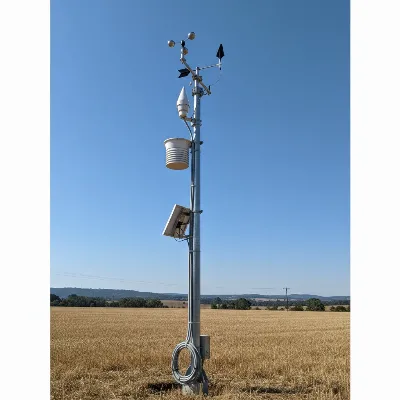 A high-tech professional weather station sensor array mounted on a pole outdoors.
Setting Up and Maintaining Your Weather Station for Longevity
Proper installation and routine maintenance are critical to ensuring your professional weather station delivers accurate data consistently and lasts for many years.
Installation Guidance
- Siting: Choose an unobstructed location for your outdoor sensor array, away from buildings, trees, and other structures that could interfere with wind, rain, or sunlight measurements. Wind sensors, for example, often require placement at least 10 feet above surrounding obstructions.
- Mounting: Securely mount the station to a sturdy pole or mast using the manufacturer’s recommended hardware. Ensure it is level for accurate rainfall and wind direction readings.
- Connectivity: Follow instructions carefully to connect sensors to the display console or gateway. For wireless and internet-connected models, ensure strong signal strength and a stable network connection.
Usage Tips
- Understand Your Data: Familiarize yourself with the various parameters measured and how to interpret them. Utilize mobile apps and web platforms for detailed graphs, historical data, and customizable alerts to truly harness your station’s capabilities.
- Regular Monitoring: Make it a habit to check your weather data daily to spot trends and anomalies. This helps you understand local patterns and also identify potential sensor issues.
Maintenance Best Practices
Consistent upkeep will protect your investment and maintain data integrity.
- Regular Cleaning: At least once a year, clean all sensors, especially the rain gauge funnel, wind cups/vanes, and the radiation shield. Use a soft cloth and distilled water; avoid abrasive materials. Ensure solar panels are clear of dirt, leaves, or algae to maximize charging efficiency.
- Inspect Mounting and Wiring: Periodically check that your weather station’s mounting hardware is secure and free from corrosion. For wired stations, inspect cables for signs of wear, fraying, or damage, and ensure all connections are tight.
- Calibration Checks: While many modern sensors are pre-calibrated, some may require periodic checks or recalibration. Compare your station’s readings with a trusted reference source (e.g., a known accurate thermometer) and adjust settings if necessary. Consult your manufacturer’s guide for specific calibration procedures.
- Power System Maintenance: If your station uses batteries, check their levels regularly and replace them as needed, especially before winter. For solar-powered units, ensure the solar panel is clean and optimally angled for maximum sun exposure.
- Software and Firmware Updates: Regularly check the manufacturer’s website or app for software and firmware updates. These updates often improve performance, add new features, or fix bugs.
- Protect Against Extremes: During severe weather, ensure your station is securely fastened. In winter, clear snow and ice from sensors to prevent blockages or damage.
“A professional weather station isn’t just about collecting data; it’s about gaining a deeper understanding of your environment, enabling smarter decisions, whether you’re tending crops or planning an expedition.” – Dr. Elena Petrova, Climatologist
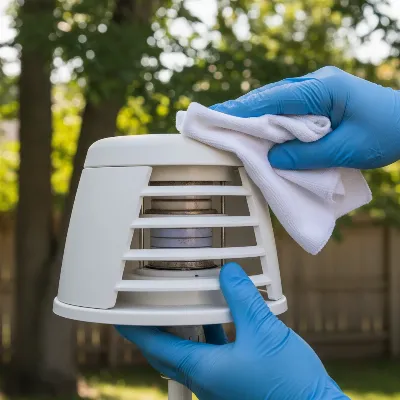 A person carefully cleaning the sensors of an outdoor weather station with a soft cloth.
Conclusion
Investing in a professional weather station offers an unparalleled opportunity to gain precise, real-time insights into your local environment. From enhancing agricultural productivity and aiding scientific research to providing critical data for personal planning and safety, these advanced instruments deliver accuracy and reliability that standard forecasts cannot match. By carefully considering factors like sensor accuracy, connectivity, features, durability, and committing to regular maintenance, you can select a weather station that will serve your needs for years to come. Embrace the power of hyper-local weather intelligence and transform how you interact with the world around you.
What kind of unique insights could a professional weather station unlock for your specific interests or profession?
Frequently Asked Questions
What is the primary difference between a home and a professional weather station?
Professional weather stations generally offer superior sensor accuracy, a wider range of measurable parameters (e.g., solar radiation, soil moisture), enhanced durability for harsh environments, faster data update intervals, and more robust connectivity options for remote monitoring and data analysis. They are designed for applications requiring high precision and continuous, reliable data.
How often should I calibrate my weather station’s sensors?
While many modern sensors are factory-calibrated for life, it’s a good practice to check sensor accuracy against a trusted reference source at least once a year. Some manufacturers provide specific calibration instructions, particularly for rainfall or wind sensors, if you notice consistent discrepancies in readings.
Can I access my professional weather station data remotely?
Yes, most professional weather stations available today offer remote access capabilities. This is typically achieved through Wi-Fi, cellular, or LPWAN connectivity, allowing you to view real-time data, historical trends, and receive alerts via dedicated mobile apps or web portals on your smartphone or computer from anywhere.
Are wired or wireless professional weather stations generally better?
Neither is inherently “better”; the choice depends on your specific needs. Wired stations offer superior data transmission stability and reliability, ideal for fixed installations where interference is a concern. Wireless stations provide greater installation flexibility, easier setup, and remote placement options, making them suitable for broader coverage or locations where cabling is impractical. Many professional stations offer both wired and wireless variants.
What are the most essential sensors for a professional weather station?
For a professional weather station, the essential sensors include those for temperature, relative humidity, wind speed and direction, barometric pressure, and precipitation (rain). Depending on your application, advanced sensors for solar radiation, UV index, soil moisture, and lightning detection may also be crucial.
Frequently Asked Questions
What is the primary difference between a home and a professional weather station?
Professional weather stations offer superior sensor accuracy, a wider range of measurable parameters like solar radiation and soil moisture, and enhanced durability for harsh environments. They also provide faster data update intervals and more robust connectivity for remote monitoring and detailed data analysis, designed for high precision applications.
How often should I calibrate my weather station's sensors?
While many modern sensors are factory-calibrated, it is good practice to check sensor accuracy against a trusted reference source at least once a year. Some manufacturers provide specific calibration instructions for rainfall or wind sensors if consistent discrepancies are observed.
Can I access my professional weather station data remotely?
Yes, most professional weather stations offer remote access via Wi-Fi, cellular, or LPWAN connectivity. This allows users to view real-time data, historical trends, and receive alerts through dedicated mobile apps or web portals on smartphones or computers from any location.
Are wired or wireless professional weather stations generally better?
Neither type is inherently better; the optimal choice depends on specific needs. Wired stations offer superior data transmission stability, ideal for fixed installations where interference is a concern, while wireless stations provide greater installation flexibility and easier setup for broader coverage or remote placements. Many professional models offer both wired and wireless options.
What are the most essential sensors for a professional weather station?
For a professional weather station, essential sensors include those for temperature, relative humidity, wind speed and direction, barometric pressure, and precipitation. Depending on the application, advanced sensors for solar radiation, UV index, soil moisture, and lightning detection may also be crucial.
Setting Up and Maintaining Your Professional Weather Station
Ensure accurate data and longevity for your professional weather station through proper installation and routine maintenance practices.
Choose an unobstructed outdoor location, away from buildings and trees, to prevent interference with wind, rain, or sunlight measurements. Securely mount the station to a sturdy pole or mast using manufacturer-recommended hardware, ensuring it is level for accurate readings.
Follow instructions to connect sensors to the display console or gateway, ensuring strong signal strength for wireless models. Familiarize yourself with the measured parameters and utilize mobile apps or web platforms for detailed graphs, historical data, and customizable alerts.
At least once a year, clean all sensors, including the rain gauge funnel, wind cups/vanes, and radiation shield, using a soft cloth and distilled water. Periodically check mounting hardware for security and corrosion, and inspect cables for wear or damage.
Regularly check battery levels and replace them as needed, especially before winter. For solar-powered units, ensure the solar panel is clean and optimally angled. Regularly check the manufacturer's website for software and firmware updates to improve performance and fix bugs.
During severe weather events, ensure your station is securely fastened to prevent damage. In winter, clear any snow and ice from sensors to maintain accurate readings and prevent blockages.

I’ve been using a professional weather station for my small farm for about six months now, and it’s been a game-changer. The precision measurements for temperature and humidity have really helped me optimize irrigation schedules and protect my crops from unexpected frost. It’s definitely an indispensable tool for agriculture, just like the guide mentioned.
This station is pretty good for advanced hobbies, and the data is generally accurate. My only minor complaint is that the setup for the more sophisticated systems was a bit more involved than I anticipated. I wish there were clearer instructions on integrating all the outdoor sensors, but once it’s running, it’s solid.
I finally upgraded to one of the top models after years of relying on basic forecasts, and the difference is night and day. The real-time data is so much more reliable for planning my outdoor events. I appreciate the detailed insights, especially the precipitation accuracy, which has saved me from a few soggy surprises.
As a researcher, having hyper-local, real-time weather data is crucial for my field studies. The accuracy within 0.5°C for temperature is exactly what I needed. This investment has truly provided years of reliable service and has become a core part of my environmental monitoring toolkit.