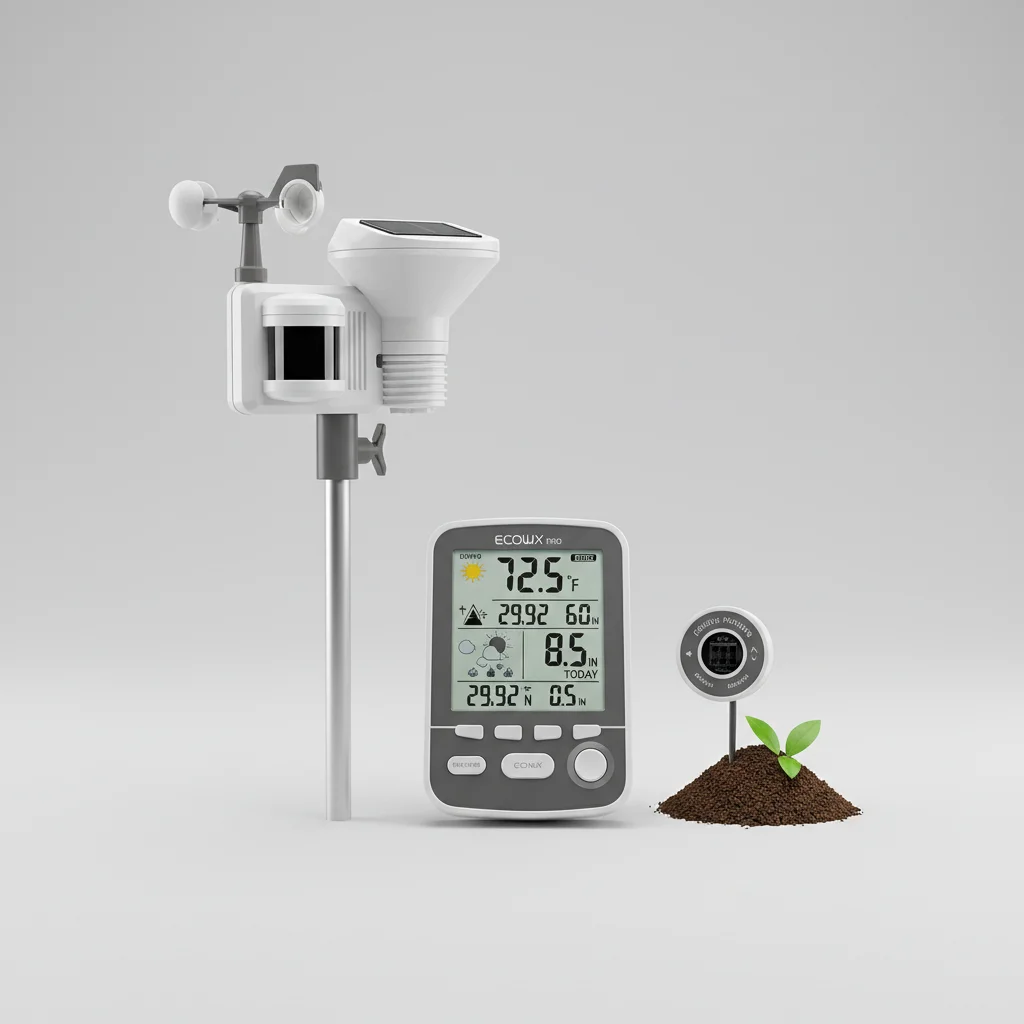
Selecting the ideal weather station for your garden involves considering several key factors, including sensor types, data accuracy, and connectivity options. For most home gardeners, a station offering at least temperature, humidity, and rainfall measurements will provide sufficient data to make informed decisions about plant care and irrigation. More advanced models can also track wind speed and direction, UV index, and soil moisture, offering a comprehensive overview of your garden’s microclimate.
Essential Sensors for Garden Weather Monitoring
When outfitting your garden with a weather station, prioritize models that include essential sensors for horticultural success. A reliable thermometer and hygrometer are crucial for monitoring ambient conditions, helping you understand when to protect sensitive plants from frost or excessive heat. A rain gauge is indispensable for tracking precipitation, ensuring your plants receive adequate water and preventing overwatering. Look for self-emptying rain gauges for minimal maintenance.
For gardeners in windy areas, an anemometer and wind vane can provide valuable insights into wind patterns, which can affect plant growth and the spread of pests. Some advanced stations also offer soil moisture sensors, which can be placed directly in your garden beds to provide real-time data on soil hydration levels, optimizing your watering schedule and conserving water.
Data Accessibility and Connectivity Options
Modern garden weather stations offer various ways to access your data, from simple LCD displays to sophisticated smartphone apps and online platforms. Many stations now feature Wi-Fi connectivity, allowing you to view real-time conditions and historical data from anywhere. This is particularly useful for gardeners who travel or want to monitor their garden remotely.
Consider stations that offer data logging capabilities, enabling you to track trends over time and understand how different weather patterns impact your garden. Some systems integrate with smart home platforms, allowing for automated actions based on weather conditions, such as turning on sprinklers when soil moisture is low or closing vents when rain is detected.
Durability and Placement Considerations
|
Our Picks for the Best Weather Station in 2026
As an Amazon Associate I earn from qualifying purchases.
|
||
| Num | Product | Action |
|---|---|---|
| 1 | 10-in-1 Wireless Weather Station,with Outdoor Sensor,Rain Gauge,Atomic Clock,Wind Speed/Wind Direction,Indoor Temperature and Humidity,Barometer,Weather Forecast, etc.(NO WiFi) |

|
| 2 | Sainlogic WiFi Smart Weather Station SA9 with 24H/ 7Days Accurate Weather Forecast by Weatherseed® AI, 8.5" Large Display,UV,Sun Light,Rain Gauge,Wind Gauge,2-Year Data Storage & Export(Only 2.4G) |
|
| 3 | AcuRite Iris (5-in-1) Indoor/Outdoor Wireless Weather Station for Indoor and Outdoor Temperature and Humidity, Wind Speed and Direction, and Rainfall with Digital Display (01512M) |
|
| 4 | 14-in-1 Wireless Weather Station with Outdoor Wireless Sensor,Radio-Controlled Clock,Rain Gauge,Wind Speed/Direction,Moon Phase,Wind Chill Index,Outdoor Dew Point,Barometer(NO WiFi) |
|
| 5 | Tempest Weather Station with Built-in Wind Meter, Rain Gauge, and Accurate Weather Forecasts, Wireless, App and Alexa Enabled |
|
| 6 | Sainlogic Smart WiFi Weather Stations Wireless Indoor Outdoor SA68 Plus,24/7 AI Weather Forecast by Weatherseed®,APP/Email Alert,Home Weather Station with Rain Gauge,2-Year Data Storage(Only 2.4G) |
|
| 7 | Ambient Weather WS-2000 Smart Weather Station with WiFi Remote Monitoring and Alerts |
|
| 8 | Sainlogic Smart WiFi Weather Station with 24H/7Days Accurate Weather Forecast by Weatherseed® AI, 8.5" Large Display,UV,Sun Light,Rain Gauge,Wind Gauge,2-Year Data Storage & Export, Only 2.4G |
|
| 9 | WiFi Weather Station Wireless Indoor Outdoor, Thermometer with Rain Gauge and Wind Speed/Direction, Large Display for Weather Forecast, Temperature, Humidity, Clock, Alarm, UV, Air Pressure, Black |
|
| 10 | Ambient Weather WS-2902 WiFi Smart Weather Station |
|
The longevity of your garden weather station depends heavily on its construction and proper placement. Choose models made from durable, UV-resistant materials that can withstand exposure to the elements. Ensure the sensors are designed for outdoor use and can operate reliably in various temperatures and weather conditions.
Proper placement is critical for accurate readings. The temperature and humidity sensors should be in a shaded, well-ventilated area, away from direct sunlight and heat sources. The rain gauge needs to be in an open area, free from obstructions like trees or buildings that could block rainfall. Anemometers should be mounted at a height where they can accurately measure wind speed without interference. Always refer to the manufacturer’s guidelines for optimal installation.
Advanced Features for the Dedicated Gardener
For gardeners seeking more detailed insights, several advanced features can enhance your weather monitoring experience. UV sensors can help you understand sun exposure levels, crucial for plants with specific light requirements or for planning outdoor activities. Barometric pressure sensors can aid in short-term weather forecasting, giving you a heads-up on approaching storms.
Some high-end stations offer integrated pest and disease risk assessment tools, using environmental data to predict potential outbreaks. These features, while not essential for every gardener, can provide a significant advantage in maintaining a healthy and productive garden.
Maintenance Tips for Optimal Performance
- Regularly clean rain gauges to prevent blockages from debris.
- Check and replace batteries in wireless sensors as recommended by the manufacturer.
- Calibrate sensors periodically to ensure continued accuracy.
- Inspect mounting hardware for stability, especially after strong winds.
- Keep sensor vents clear of dust, dirt, and insect nests.
Frequently Asked Questions
What are the most important sensors for a garden weather station?
The most important sensors for a garden weather station are temperature, humidity, and a rain gauge. These provide crucial data for plant care, irrigation scheduling, and protecting sensitive plants from extreme conditions like frost or excessive heat.
How can I access data from a modern garden weather station?
Modern garden weather stations offer various data access methods, including LCD displays, smartphone apps, and online platforms. Many models feature Wi-Fi connectivity, allowing remote monitoring of real-time conditions and historical data from anywhere.
What should I consider for the durability of a garden weather station?
For durability, choose garden weather stations made from UV-resistant materials designed to withstand outdoor elements. Ensure sensors are robust and can operate reliably across various temperatures and weather conditions to ensure longevity.
Where is the best place to install weather station sensors in a garden?
For accurate readings, place temperature and humidity sensors in a shaded, well-ventilated area away from direct sunlight. Position the rain gauge in an open spot free from obstructions, and mount anemometers at a height that avoids wind interference.
Are advanced features like UV sensors beneficial for gardeners?
Yes, advanced features like UV sensors can be beneficial for dedicated gardeners. They help understand sun exposure levels, which is crucial for plants with specific light requirements, and can assist in planning outdoor activities safely.
Maintain Your Garden Weather Station for Optimal Performance
Regular maintenance ensures your garden weather station provides accurate and reliable data for effective garden management.
Prevent blockages and ensure accurate rainfall measurements by regularly cleaning your rain gauges. Remove any debris, leaves, or insects that may accumulate and obstruct the sensor.
Check and replace batteries in wireless sensors according to the manufacturer's recommendations. This ensures continuous operation and prevents data loss due to power failure.
Calibrate your weather station's sensors periodically to maintain accuracy over time. Refer to your device's manual for specific calibration instructions and recommended intervals.
Regularly inspect all mounting hardware for stability, especially after strong winds or severe weather. Tighten any loose screws or brackets to prevent sensors from shifting or falling.
Ensure sensor vents are clear of dust, dirt, and insect nests. Blocked vents can impair the accuracy of temperature and humidity readings, so gentle cleaning is recommended.

The info on connectivity options was really useful. I got a station with Wi-Fi, but the setup was a bit more complicated than I expected. It works fine now, but it took me a while to get it linked to my phone. Still, the data accuracy for temperature and humidity is spot on, which is what I mainly needed for my raised beds.
I’ve been looking for a good weather station for my garden for ages, and this post really helped me narrow it down. I ended up getting a model that tracks temperature, humidity, and rainfall, which is perfect for my needs. It’s made a huge difference in how I plan my watering schedule and protect my more delicate plants. Highly recommend focusing on those essential sensors!
Great breakdown of what to look for! I already had a basic setup, but I realized I was missing out on wind speed and direction data. Upgraded to a more advanced model mentioned here, and it’s been fascinating to see how the wind affects different parts of my garden. Definitely helps with deciding where to plant certain veggies that need more shelter.
As a new gardener, I was overwhelmed by all the choices. This guide made it so much clearer what to prioritize. I focused on a station with a reliable rain gauge, and it’s been a game-changer for understanding how much water my plants are actually getting. No more guessing if I need to water after a light shower!