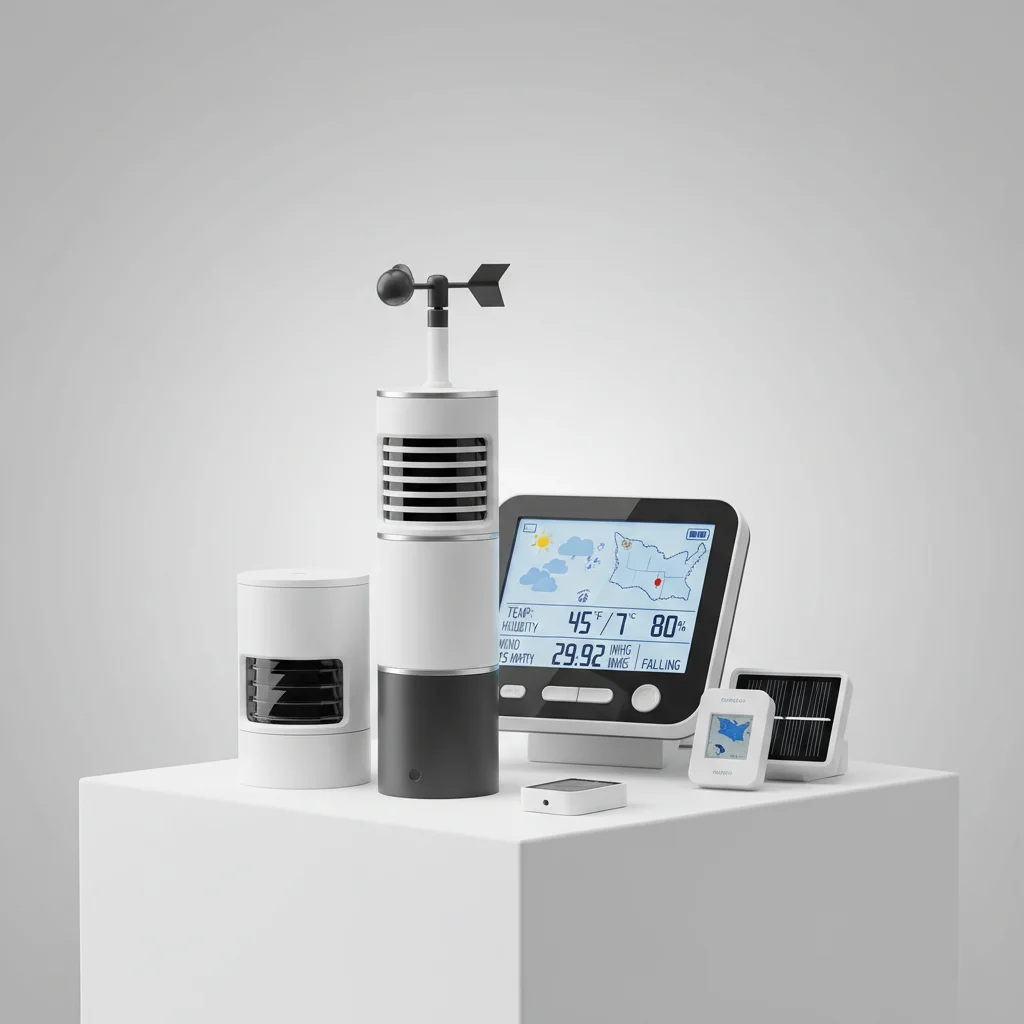
Choosing the right weather station for your Spokane home requires careful consideration of the local climate, which features distinct seasons with hot, dry summers and cold, snowy winters. To ensure accurate and reliable data, you’ll need a station capable of handling significant temperature swings, measuring snowfall, and providing precise wind data, given Spokane’s occasional strong winds. This guide will help you identify the key features essential for a home weather station in the Spokane area.
Understanding Spokane’s Unique Climate Needs
Spokane experiences a semi-arid climate, characterized by four distinct seasons. Summers are typically warm and dry, with temperatures often exceeding 90°F (32°C), while winters are cold and snowy, with average lows below freezing and significant snowfall accumulations. Spring and autumn offer milder temperatures but can be unpredictable, with sudden shifts in weather patterns. A robust weather station for this region must be able to withstand these extremes, providing accurate readings for temperature, humidity, wind speed and direction, and precipitation, including snow.
Key Features for Spokane Weather Stations
When selecting a weather station for a Spokane home, prioritize models with durable construction that can endure both summer heat and winter cold. Look for sensors designed to operate effectively in sub-freezing temperatures without compromising accuracy. A heated rain gauge, for instance, is invaluable for accurately measuring precipitation during freezing conditions, preventing ice buildup from skewing data. Additionally, consider stations with robust wind sensors that can withstand occasional strong gusts common in the Spokane valley.
- Temperature Range: Ensure the station can accurately measure temperatures from below 0°F to over 100°F.
- Snowfall Measurement: Look for a heated rain gauge or a separate snow sensor for accurate winter precipitation data.
- Wind Durability: Choose a model with a sturdy anemometer and wind vane to withstand strong winds.
- Wireless Range: Consider the distance between your outdoor sensors and indoor console for optimal signal.
- Data Logging: The ability to store and analyze historical data is crucial for understanding local weather patterns.
Installation and Placement Considerations in Spokane
|
Our Picks for the Best Weather Station in 2026
As an Amazon Associate I earn from qualifying purchases.
|
||
| Num | Product | Action |
|---|---|---|
| 1 | Ambient Weather WS-2000 Smart Weather Station with WiFi Remote Monitoring and Alerts |

|
| 2 | AcuRite Iris (5-in-1) Indoor/Outdoor Wireless Weather Station for Indoor and Outdoor Temperature and Humidity, Wind Speed and Direction, and Rainfall with Digital Display (01512M) |
|
| 3 | WiFi Weather Station Wireless Indoor Outdoor, Thermometer with Rain Gauge and Wind Speed/Direction, Large Display for Weather Forecast, Temperature, Humidity, Clock, Alarm, UV, Air Pressure, Black |
|
| 4 | Tempest Weather Station with Built-in Wind Meter, Rain Gauge, and Accurate Weather Forecasts, Wireless, App and Alexa Enabled |
|
| 5 | 14-in-1 Wireless Weather Station with Outdoor Wireless Sensor,Radio-Controlled Clock,Rain Gauge,Wind Speed/Direction,Moon Phase,Wind Chill Index,Outdoor Dew Point,Barometer(NO WiFi) |
|
| 6 | Sainlogic WiFi Smart Weather Station SA9 with 24H/ 7Days Accurate Weather Forecast by Weatherseed® AI, 8.5" Large Display,UV,Sun Light,Rain Gauge,Wind Gauge,2-Year Data Storage & Export(Only 2.4G) |
|
| 7 | Sainlogic Smart WiFi Weather Station with 24H/7Days Accurate Weather Forecast by Weatherseed® AI, 8.5" Large Display,UV,Sun Light,Rain Gauge,Wind Gauge,2-Year Data Storage & Export, Only 2.4G |
|
| 8 | Ambient Weather WS-2902 WiFi Smart Weather Station |
|
| 9 | 10-in-1 Wireless Weather Station,with Outdoor Sensor,Rain Gauge,Atomic Clock,Wind Speed/Wind Direction,Indoor Temperature and Humidity,Barometer,Weather Forecast, etc.(NO WiFi) |
|
| 10 | Sainlogic Smart WiFi Weather Stations Wireless Indoor Outdoor SA68 Plus,24/7 AI Weather Forecast by Weatherseed®,APP/Email Alert,Home Weather Station with Rain Gauge,2-Year Data Storage(Only 2.4G) |
|
Proper installation is paramount for accurate readings. For Spokane homes, ensure your outdoor sensor array is placed in an open area, away from obstructions like trees, buildings, or fences that could interfere with wind or rain measurements. For temperature and humidity, avoid direct sunlight on the sensors, which can lead to artificially high readings. Given Spokane’s varied terrain, from riverfront properties to hillside homes, consider how local topography might influence microclimates around your property and adjust placement accordingly.
Smart Home Integration and Local Data Access
Many modern weather stations offer smart home integration, allowing you to access your local weather data through apps or smart displays. This can be particularly useful in Spokane for planning outdoor activities, gardening, or even managing home energy consumption based on real-time conditions. Look for stations that provide easy access to historical data, allowing you to track trends specific to your neighborhood, which can be more precise than regional forecasts. Some stations also allow you to share your data with local weather networks, contributing to a broader understanding of Spokane’s microclimates.
Maintenance Tips for Spokane’s Climate
Regular maintenance is crucial for the longevity and accuracy of your weather station, especially in Spokane’s diverse climate. During the fall, ensure your rain gauge is clear of leaves and debris before winter sets in. In winter, periodically check for ice buildup on sensors, particularly the anemometer and rain gauge. During the dry summer months, dust can accumulate, so a gentle cleaning of sensors can help maintain accuracy. Battery checks should be performed bi-annually, ideally before winter and summer, to prevent unexpected power loss.

I picked up a weather station based on the recommendation for handling temperature swings, and it does a decent job with the summer heat and winter cold. However, I’ve noticed the humidity readings seem a bit off sometimes, especially during those unpredictable spring days. It’s not a deal-breaker, but I was hoping for a bit more accuracy there. Still, it’s better than guessing.
This was exactly what I needed to understand what features are essential for a home weather station in the Spokane area. The mention of needing something that can handle both 90°F summers and below-freezing winters really hit home. My new station has been incredibly reliable, providing consistent data through all our distinct seasons. Highly recommend focusing on those key features.
I’ve been looking for a good weather station that can really handle the Spokane winters, especially with all the snow we get. This guide was super helpful in pointing out the need for accurate snowfall measurement. My new station has been fantastic, giving me precise readings even during those heavy December storms. It’s a huge upgrade from my old, basic thermometer.
Living in Spokane, I know how quickly the weather can change, especially with those strong winds. I appreciated the emphasis on getting precise wind data. My new unit, which was in the mid-range price point mentioned, has been great for tracking gusts. I just wish the display was a little brighter for outdoor viewing, but overall, it’s a solid purchase.