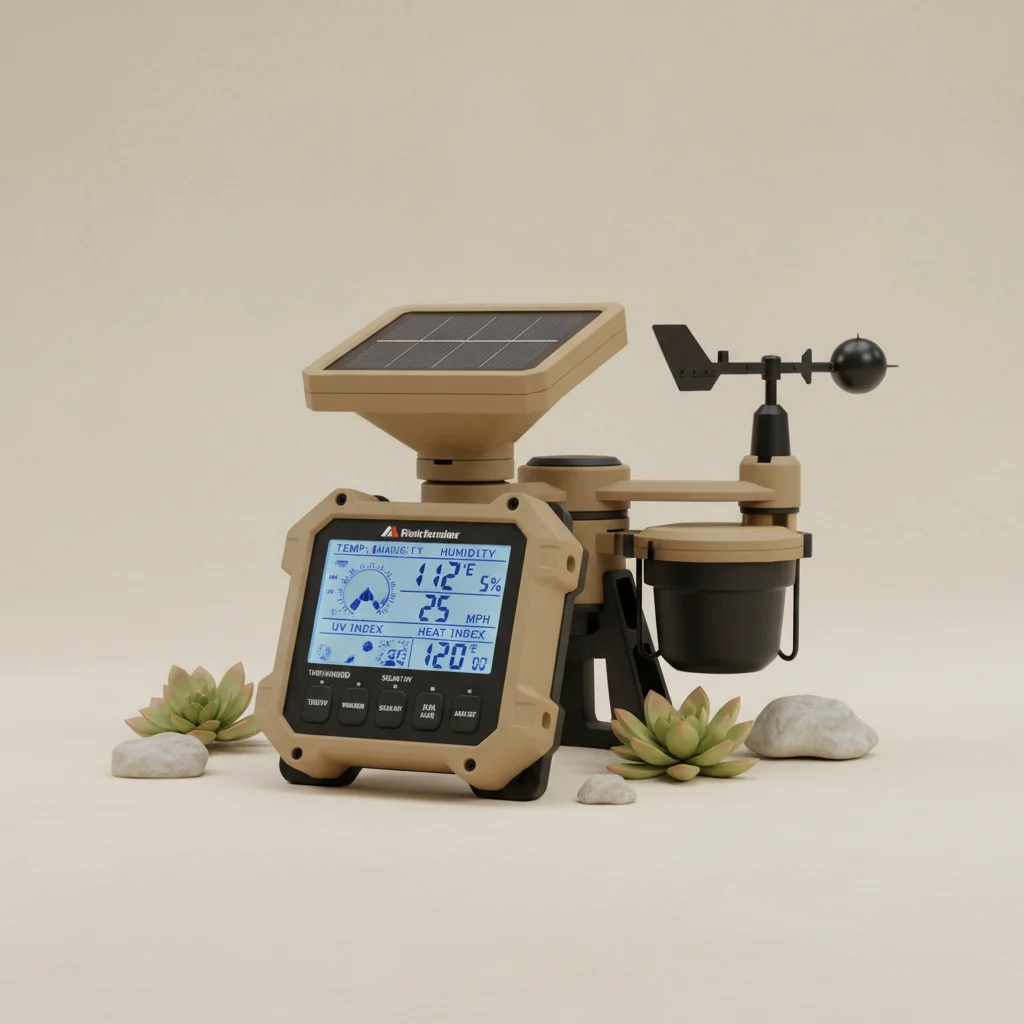
When selecting a weather station for desert climates, prioritize models that offer exceptional durability, accuracy in extreme temperatures, and robust resistance to dust and UV radiation. Deserts present unique challenges, including intense solar exposure, wide temperature swings, and abrasive sand. A robust station designed to withstand these conditions will provide reliable data for years. Specifically, look for models with sealed components, high-quality UV-resistant plastics, and a wide operating temperature range, typically from -40°F to 150°F (-40°C to 65°C).
Understanding Desert Climate Challenges
Desert environments are characterized by their aridity and extreme temperatures. Daytime temperatures can soar, while nights can be surprisingly cold, leading to significant thermal expansion and contraction on station components. High UV radiation can degrade plastics and electronic casings over time, making material quality paramount. Fine dust and sand can infiltrate sensors, affecting accuracy and longevity. Stations with internal fans or well-sealed enclosures are crucial for protecting sensitive electronics.
Key Features for Durability and Accuracy
For optimal performance in desert climates, consider weather stations that offer specific features. Look for models with robust, UV-stabilized plastics or metal components that can withstand prolonged sun exposure without becoming brittle. Temperature sensors should be shielded from direct sunlight to prevent inaccurate readings due to radiant heat. Wind sensors need to be durable enough to handle occasional strong gusts and resistant to sand abrasion. Rain gauges, while less frequently used in deserts, should be designed to prevent dust accumulation that could impede their function.
- UV-resistant materials for all external components.
- Wide operating temperature range for sensors and electronics.
- Sealed enclosures to protect against dust and sand ingress.
- Solar radiation shields for accurate temperature readings.
- Robust wind sensors capable of handling strong, dusty winds.
Powering Your Desert Weather Station
|
Our Picks for the Best Weather Station in 2026
As an Amazon Associate I earn from qualifying purchases.
|
||
| Num | Product | Action |
|---|---|---|
| 1 | Tempest Weather Station with Built-in Wind Meter, Rain Gauge, and Accurate Weather Forecasts, Wireless, App and Alexa Enabled |

|
| 2 | Ambient Weather WS-2000 Smart Weather Station with WiFi Remote Monitoring and Alerts |
|
| 3 | Sainlogic Smart WiFi Weather Stations Wireless Indoor Outdoor SA68 Plus,24/7 AI Weather Forecast by Weatherseed®,APP/Email Alert,Home Weather Station with Rain Gauge,2-Year Data Storage(Only 2.4G) |
|
| 4 | 10-in-1 Wireless Weather Station,with Outdoor Sensor,Rain Gauge,Atomic Clock,Wind Speed/Wind Direction,Indoor Temperature and Humidity,Barometer,Weather Forecast, etc.(NO WiFi) |
|
| 5 | Sainlogic WiFi Smart Weather Station SA9 with 24H/ 7Days Accurate Weather Forecast by Weatherseed® AI, 8.5" Large Display,UV,Sun Light,Rain Gauge,Wind Gauge,2-Year Data Storage & Export(Only 2.4G) |
|
| 6 | Sainlogic Smart WiFi Weather Station with 24H/7Days Accurate Weather Forecast by Weatherseed® AI, 8.5" Large Display,UV,Sun Light,Rain Gauge,Wind Gauge,2-Year Data Storage & Export, Only 2.4G |
|
| 7 | AcuRite Iris (5-in-1) Indoor/Outdoor Wireless Weather Station for Indoor and Outdoor Temperature and Humidity, Wind Speed and Direction, and Rainfall with Digital Display (01512M) |
|
| 8 | Ambient Weather WS-2902 WiFi Smart Weather Station |
|
| 9 | 14-in-1 Wireless Weather Station with Outdoor Wireless Sensor,Radio-Controlled Clock,Rain Gauge,Wind Speed/Direction,Moon Phase,Wind Chill Index,Outdoor Dew Point,Barometer(NO WiFi) |
|
| 10 | WiFi Weather Station Wireless Indoor Outdoor, Thermometer with Rain Gauge and Wind Speed/Direction, Large Display for Weather Forecast, Temperature, Humidity, Clock, Alarm, UV, Air Pressure, Black |
|
Given the abundant sunshine, solar power is an ideal solution for weather stations in desert climates. Many high-quality stations come equipped with integrated solar panels that charge a backup battery, ensuring continuous operation even during cloudy periods or at night. This eliminates the need for frequent battery replacements, which can be inconvenient in remote locations. Ensure the solar panel is adequately sized for your specific location’s solar insolation and that the battery capacity can sustain operations through extended periods without sun.
Data Transmission and Remote Monitoring
Remote monitoring is often a critical requirement for desert weather stations, as they are frequently deployed in isolated areas. Look for stations that offer reliable long-range wireless transmission, such as those utilizing LoRaWAN or other low-power wide-area network technologies. Cloud-based data platforms are also highly beneficial, allowing you to access real-time and historical data from anywhere with an internet connection. Some advanced systems even offer alerts for specific conditions, such as high winds or extreme temperatures, which can be invaluable for agricultural or research applications.
Installation Considerations for Desert Environments
Proper installation is vital for the longevity and accuracy of your weather station in a desert climate. Mount the station on a sturdy pole or mast, ensuring it is securely anchored to withstand strong winds. Position the solar panel to receive maximum sunlight throughout the day, and ensure all sensors are clear of obstructions. Regular cleaning of the solar panel and occasional inspection of the sensors for dust accumulation will help maintain optimal performance. Consider using a protective enclosure for the display unit if it’s exposed to direct sunlight or extreme temperatures.
Frequently Asked Questions
What are the main challenges for weather stations in desert climates?
The main challenges for weather stations in desert climates include intense solar exposure, wide temperature swings from -40u00b0F to 150u00b0F, high UV radiation, and abrasive fine dust and sand. These conditions can degrade materials, infiltrate sensors, and affect overall accuracy and longevity.
What materials are best for desert weather station components?
For desert weather station components, UV-stabilized plastics or metal are best to withstand prolonged sun exposure without becoming brittle. These materials help prevent degradation from high UV radiation, ensuring the station's durability over time.
How should temperature sensors be protected in a desert environment?
Temperature sensors in a desert environment should be shielded from direct sunlight to prevent inaccurate readings caused by radiant heat. Solar radiation shields are crucial for maintaining the accuracy of temperature data, especially during peak daytime temperatures.
Is solar power suitable for desert weather stations?
Yes, solar power is an ideal solution for desert weather stations due to abundant sunshine. Many high-quality stations include integrated solar panels that charge a backup battery, ensuring continuous operation even during cloudy periods or at night.
What data transmission methods are best for remote desert locations?
For remote desert locations, reliable long-range wireless transmission technologies like LoRaWAN or other low-power wide-area network technologies are best. Cloud-based data platforms also allow access to real-time and historical data from anywhere with an internet connection.
How to Install a Weather Station in a Desert Climate
Proper installation is vital for the longevity and accuracy of your weather station in a desert climate, ensuring it withstands harsh conditions and provides reliable data.
Mount the weather station on a sturdy pole or mast. Ensure it is securely anchored to withstand strong winds, which are common in desert environments.
Position the solar panel to receive maximum sunlight throughout the day. This ensures optimal charging of the backup battery and continuous operation.
Ensure all sensors are clear of obstructions to guarantee accurate readings. Obstructions can interfere with wind, temperature, and other environmental measurements.
Regularly clean the solar panel and occasionally inspect sensors for dust accumulation. This maintenance helps maintain optimal performance and data accuracy.

I live in Arizona and have gone through a few weather stations that just couldn’t handle the heat. This post really hit the nail on the head about UV-resistant plastics. My new station, which I bought after reading this, has held up perfectly through a brutal summer. The data on temperature and humidity has been super accurate, even when it’s over 110°F.
Finally, a guide that understands desert conditions! The point about intense solar exposure and degradation of plastics is so true. I’ve had sensors literally crack and fall apart. My current setup, chosen with these features in mind, has been fantastic. It’s been running flawlessly for months, providing consistent readings.
I appreciated the focus on dust resistance, which is a huge issue where I am in New Mexico. The station I picked out based on the recommendations does a good job with that, but I’ve noticed the wind speed sensor seems a little off sometimes. It’s not a dealbreaker, but I was hoping for perfect accuracy across all metrics.
Great info here. I was specifically looking for something that could handle the wide temperature swings we get in Nevada, and the advice about operating temperature ranges was really helpful. My old one always seemed to glitch out when it got really cold at night. The new one I got has sealed components and has been rock solid so far.