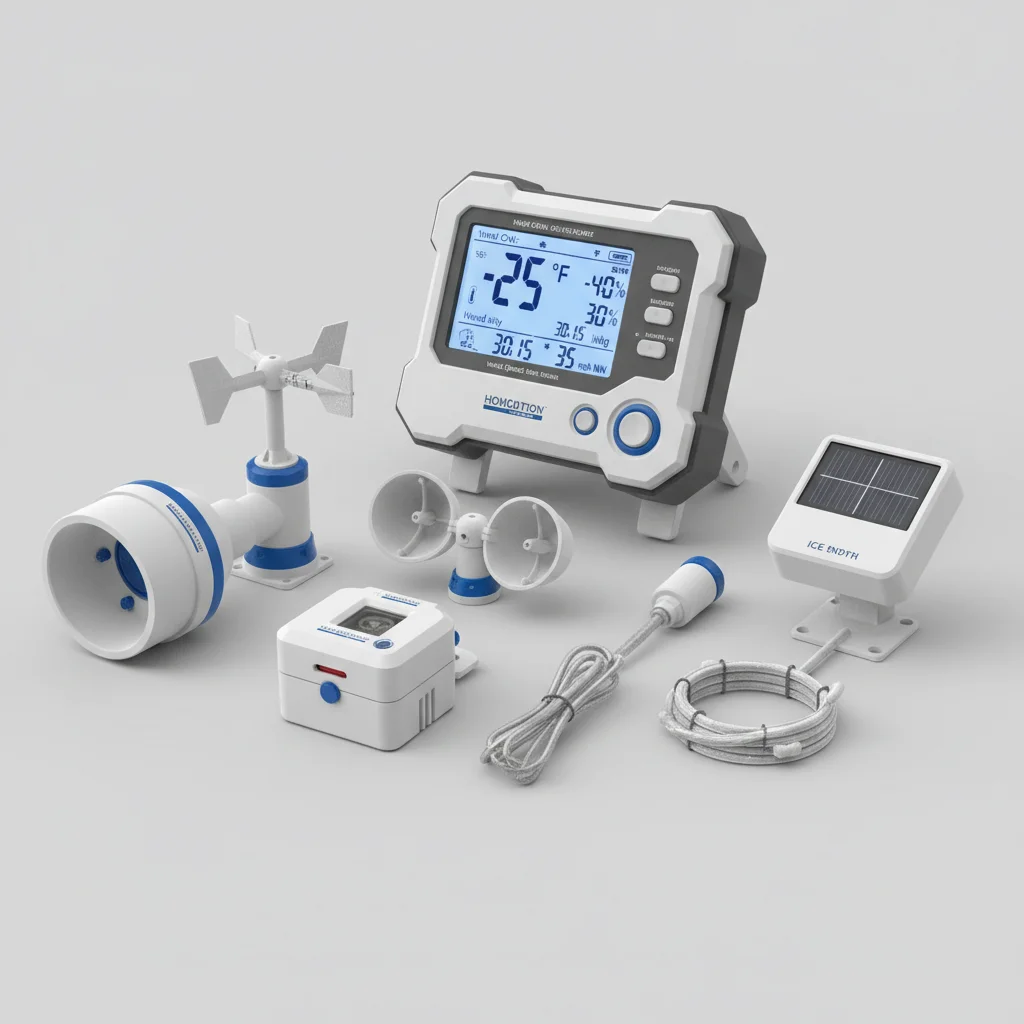
When choosing a weather station for cold climates, prioritize models with heated sensors, sealed electronics, and durable materials like UV-resistant plastics or metal alloys. These features ensure reliable data collection in freezing temperatures, ice, and snow. Specifically, look for stations with an operating temperature range extending below your typical winter lows to guarantee accurate readings and prevent component failure.
Understanding Cold Climate Challenges for Weather Stations
Cold climates pose distinct challenges for weather stations. Ice accumulation can hinder anemometer and wind vane movement, leading to inaccurate wind speed and direction data. Snow can obstruct rain gauges and solar panels, impacting precipitation measurements and power supply. Extreme cold can also diminish battery life, stiffen moving parts, and cause electronic components to fail if not adequately protected. Therefore, a weather station designed for these conditions must specifically address these vulnerabilities.
A critical factor is the material composition of external sensors. Plastics suitable for temperate climates may become brittle and crack in freezing temperatures, compromising the station’s integrity. Metal components should be corrosion-resistant and engineered to prevent ice buildup. Always consider models that explicitly state their operating temperature range, ensuring it covers the lowest temperatures expected in your location.
Key Features for Cold Weather Performance
For optimal performance in cold climates, several features are essential. Heated sensors, particularly for the anemometer and rain gauge, prevent ice and snow accumulation, maintaining accuracy. Sealed electronics protect internal components from moisture ingress, a significant concern with melting snow and ice. Robust mounting hardware is also crucial to withstand strong winds and the added weight of snow and ice without failure.
Battery life and power options are equally vital. Lithium batteries generally outperform alkaline batteries in cold conditions. Stations with solar panels should include a backup power source or a larger battery capacity to compensate for reduced sunlight during winter. Some advanced stations offer wired power options, providing a reliable solution for continuous operation.
Recommended Sensor Types and Materials
|
Our Picks for the Best Weather Station in 2026
As an Amazon Associate I earn from qualifying purchases.
|
||
| Num | Product | Action |
|---|---|---|
| 1 | 10-in-1 Wireless Weather Station,with Outdoor Sensor,Rain Gauge,Atomic Clock,Wind Speed/Wind Direction,Indoor Temperature and Humidity,Barometer,Weather Forecast, etc.(NO WiFi) |

|
| 2 | Ambient Weather WS-2902 WiFi Smart Weather Station |
|
| 3 | Tempest Weather Station with Built-in Wind Meter, Rain Gauge, and Accurate Weather Forecasts, Wireless, App and Alexa Enabled |
|
| 4 | Sainlogic WiFi Smart Weather Station SA9 with 24H/ 7Days Accurate Weather Forecast by Weatherseed® AI, 8.5" Large Display,UV,Sun Light,Rain Gauge,Wind Gauge,2-Year Data Storage & Export(Only 2.4G) |
|
| 5 | AcuRite Iris (5-in-1) Indoor/Outdoor Wireless Weather Station for Indoor and Outdoor Temperature and Humidity, Wind Speed and Direction, and Rainfall with Digital Display (01512M) |
|
| 6 | 14-in-1 Wireless Weather Station with Outdoor Wireless Sensor,Radio-Controlled Clock,Rain Gauge,Wind Speed/Direction,Moon Phase,Wind Chill Index,Outdoor Dew Point,Barometer(NO WiFi) |
|
| 7 | Sainlogic Smart WiFi Weather Stations Wireless Indoor Outdoor SA68 Plus,24/7 AI Weather Forecast by Weatherseed®,APP/Email Alert,Home Weather Station with Rain Gauge,2-Year Data Storage(Only 2.4G) |
|
| 8 | Sainlogic Smart WiFi Weather Station with 24H/7Days Accurate Weather Forecast by Weatherseed® AI, 8.5" Large Display,UV,Sun Light,Rain Gauge,Wind Gauge,2-Year Data Storage & Export, Only 2.4G |
|
| 9 | WiFi Weather Station Wireless Indoor Outdoor, Thermometer with Rain Gauge and Wind Speed/Direction, Large Display for Weather Forecast, Temperature, Humidity, Clock, Alarm, UV, Air Pressure, Black |
|
| 10 | Ambient Weather WS-2000 Smart Weather Station with WiFi Remote Monitoring and Alerts |
|
When evaluating sensors, consider ultrasonic anemometers, which lack moving parts that can freeze, or traditional cup anemometers made from durable, cold-resistant materials, often with integrated heating elements. Rain gauges should be self-emptying tipping bucket designs, ideally with a heating element to melt snow and ice for accurate liquid equivalent measurements. Temperature and humidity sensors require housing in a radiation shield to prevent solar radiation from artificially inflating readings, especially with reflective snow cover.
- Heated anemometers prevent ice buildup on moving parts.
- Self-emptying, heated tipping bucket rain gauges ensure accurate precipitation.
- UV-resistant, cold-tolerant plastics or metal alloys are essential for all external components.
- Sealed electronic enclosures protect against moisture and condensation.
- Lithium batteries or robust wired power options provide reliable operation.
Installation and Maintenance Tips for Winter
Proper installation is as important as the station’s features. Mount the station securely to withstand strong winter winds and the potential weight of ice and snow. Clear any obstructions, such as overhanging branches, that could interfere with sensor readings or accumulate snow. Regular maintenance, even in cold weather, is crucial. Periodically check for ice buildup, clear snow from solar panels, and inspect cables for any damage.
Consider the station’s accessibility for maintenance. While optimal placement for readings is important, easy access for cleaning and inspection is valuable in areas with heavy snowfall. Some users opt for lower mounting heights in winter or designs that allow for easy lowering and raising of the sensor array.
Top Brands and Models for Cold Weather Performance
Several brands are recognized for producing weather stations that perform well in cold climates. Davis Instruments, for example, offers models like the Vantage Pro2, highly regarded for its robust construction and optional heating accessories. Ambient Weather also provides stations, such as the WS-2000 and WS-5000, built with durable materials and good cold weather ratings. When researching specific models, always check user reviews from those in similar climates and review manufacturer specifications for operating temperature ranges.
Investing in a higher-quality station designed for extreme conditions will prevent issues and ensure more accurate data long-term. While budget options exist, they often compromise on material quality and sensor heating, which are critical for reliable performance when temperatures drop. Prioritize stations offering replacement parts and good customer support, as even robust equipment may require attention over years of use in harsh environments.
Frequently Asked Questions
What are the main challenges for weather stations in cold climates?
The main challenges include ice accumulation on sensors, snow blocking rain gauges and solar panels, reduced battery life in extreme cold, and electronic component failure due to moisture or low temperatures. These factors can lead to inaccurate readings and operational issues. For example, ice can impede anemometer movement, affecting wind data.
Which sensor types are best for cold weather performance?
For cold weather, ultrasonic anemometers are ideal as they have no moving parts to freeze. Heated tipping bucket rain gauges are recommended for accurate precipitation measurements, melting snow and ice. Temperature and humidity sensors should be housed in a radiation shield to prevent solar radiation from skewing readings.
What materials should a cold climate weather station be made of?
A cold climate weather station should be constructed from UV-resistant, cold-tolerant plastics or metal alloys that will not become brittle in sub-zero temperatures. Metal components should also be corrosion-resistant and designed to prevent ice buildup. These materials ensure the station's integrity and longevity.
How does extreme cold affect weather station batteries?
Extreme cold significantly reduces battery life, especially for alkaline batteries. Lithium batteries generally perform better in low temperatures. For solar-powered stations, a backup power source or larger battery capacity is essential to compensate for reduced sunlight during winter months, ensuring continuous operation.
What installation tips are crucial for winter weather stations?
Crucial installation tips include securely mounting the station to withstand strong winter winds and the weight of ice and snow. Clear any obstructions like overhanging branches that could interfere with sensor readings. Consider the station's accessibility for maintenance, especially in areas with heavy snowfall, for safe cleaning and inspection.

I appreciated the mention of sealed electronics, which is something I hadn’t really considered before. My current station has been a bit finicky with ice buildup affecting some readings, even though it claims to be for cold weather. I wish it had better sealing. It’s okay, but not perfect for really heavy snow.
I live in Minnesota and have gone through a few weather stations that just couldn’t handle the brutal winters. This guide was spot on about needing heated sensors. My new station, which has them, has been giving me consistent readings even when it’s well below zero. No more guessing about wind chill!
The advice about durable materials like UV-resistant plastics was really helpful. I’ve had issues with cracking on my old station’s housing after a few years of harsh sun and then freezing temps. My new one feels much sturdier and I’m hoping it holds up better. So far, so good with the data accuracy.
This was exactly what I needed! I was always frustrated with my old rain gauge getting completely blocked by snow, making precipitation measurements useless in winter. The tip about looking for models designed to prevent obstruction was key. My new station has a much better design for that, and I’m finally getting accurate snow accumulation data.